Direct vs Regular Mutual Funds: The Fee Alone Does Not Tell the Full Story
A direct plan costs less, and the gap is real. But the fee is one number among several. Here is what the gap costs, and what it can save you in time and in costly mistakes.
I hold an AMFI ARN and work at my family's mutual fund distribution business, which earns from regular plans. Read this with that in mind.
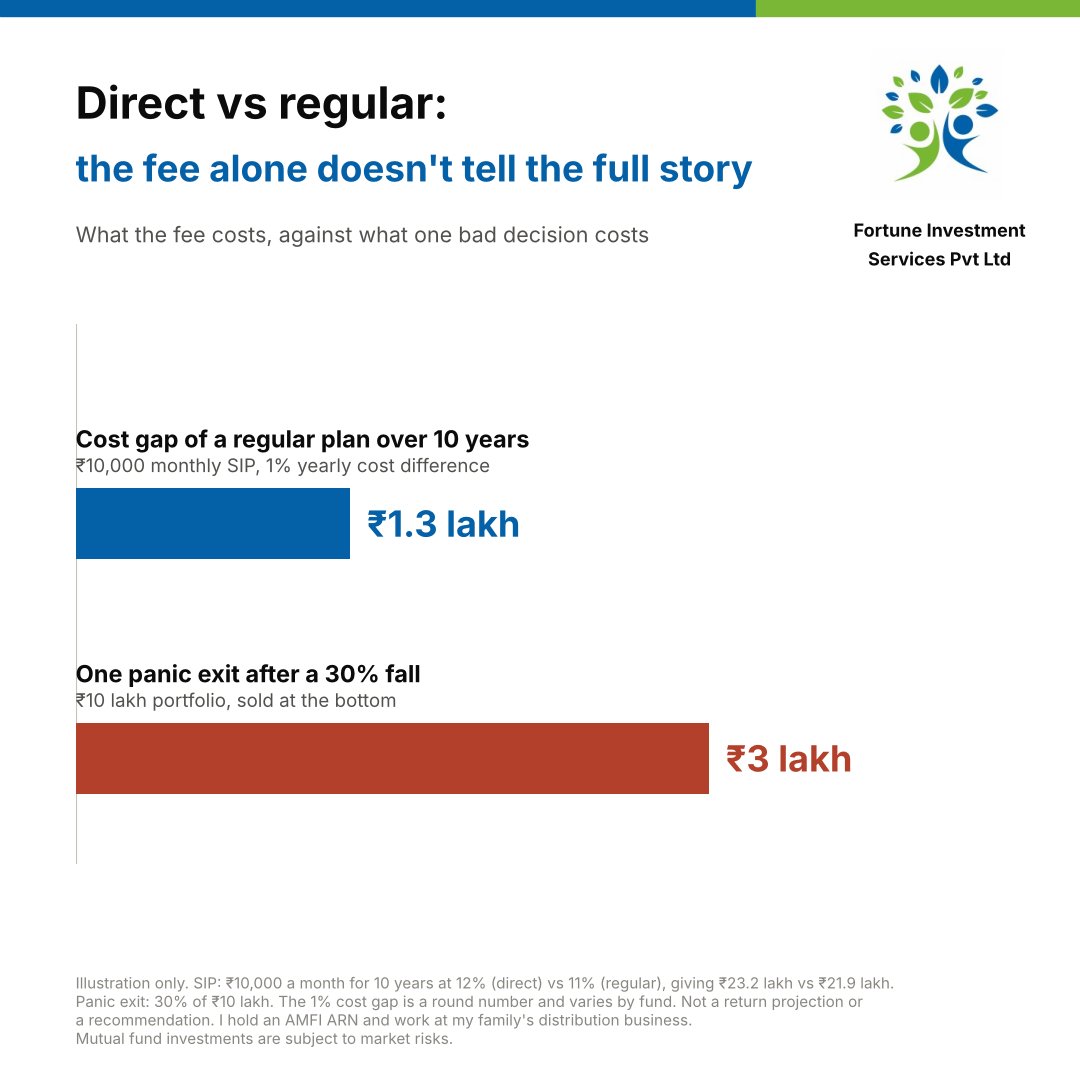
Apps now show exactly what a regular plan costs against a direct one, and the gap is real. On a ₹10,000 monthly SIP for 10 years, a 1% yearly cost difference turns ₹23.2 lakh into ₹21.9 lakh, assuming 12% returns. That is ₹1.3 lakh on ₹12 lakh invested.
So the fair question is what could cost more than that.
Your time. A working professional already has a career and a family. Doing it yourself means choosing funds, reviewing them, rebalancing, handling taxes and paperwork, and staying calm when the news is bad. That is a second job nobody applied for.
Volatility, not just crashes. Markets go up and down and up and down, and every swing tempts you to switch funds or pause your SIP. On a ₹10 lakh portfolio, a 1% cost is ₹10,000 a year. Selling after a 30% fall locks in ₹3 lakh, which is 30 years of that cost.
Chasing winners. Axis Mutual Fund's study found investors' returns lag the funds they hold, because money follows last year's performance.
Be honest with yourself. When your portfolio is down 40%, do you buy more? Would you sell a fund that did well for 5 years because the manager changed a few stocks? Most of us can't name the stocks our funds hold.
A good distributor takes the second job off your plate and is the person who says hold, or buy more, when you feel like doing the opposite. Not every distributor works that way. This is how we run it at FISPL.
Point is, compare the fee to what it saves you. If you have the time and the nerve to stay invested for 10 years on your own, direct is cheaper. If you don't, the fee is not the biggest number in your plan.
In the last crash, did you buy more, hold, or sell?
This article is for education only. It is not investment advice or a recommendation. The numbers are illustrations and not a projection of returns. Mutual fund investments are subject to market risks, read all scheme related documents carefully.
நேரடி vs வழக்கமான மியூச்சுவல் ஃபண்டுகள்: கட்டணம் மட்டும் முழு கதையையும் சொல்லாது
ஒரு நேரடித் திட்டம் குறைவாக செலவாகும், மற்றும் இடைவெளி உண்மையானது. ஆனால் கட்டணம் பலவற்றில் ஒரு எண். இடைவெளியின் விலை என்ன, அது உங்களை நேரத்திலும் விலையுயர்ந்த தவறுகளிலும் சேமிக்கும்.
நான் AMFI ARN ஐ வைத்திருக்கிறேன் மற்றும் எனது குடும்பத்தின் பரஸ்பர நிதி விநியோக வணிகத்தில் வேலை செய்கிறேன், இது வழக்கமான திட்டங்களில் இருந்து சம்பாதிக்கிறது. அதை மனதில் வைத்து இதை படியுங்கள்.
நேரடி திட்டத்திற்கு எதிராக வழக்கமான திட்டத்திற்கு எவ்வளவு செலவாகும் என்பதை ஆப்ஸ் இப்போது சரியாகக் காட்டுகிறது, மேலும் இடைவெளி உண்மையானது. 10 ஆண்டுகளுக்கு ₹10,000 மாதாந்திர SIP இல், 1% வருடாந்திர செலவு வித்தியாசம் ₹23.2 லட்சத்தை ₹21.9 லட்சமாக மாற்றுகிறது, 12% வருமானம் கிடைக்கும். அதாவது ₹12 லட்சத்தில் ₹1.3 லட்சம் முதலீடு செய்யப்படுகிறது.
எனவே அதைவிட என்ன விலை அதிகமாக இருக்கும் என்பது நியாயமான கேள்வி.
உங்கள் நேரம். பணிபுரியும் நிபுணருக்கு ஏற்கனவே ஒரு தொழில் மற்றும் குடும்பம் உள்ளது. அதை நீங்களே செய்வது என்பது நிதியைத் தேர்ந்தெடுப்பது, அவற்றை மதிப்பாய்வு செய்தல், மறுசீரமைத்தல், வரிகள் மற்றும் ஆவணங்களைக் கையாளுதல் மற்றும் செய்தி மோசமாக இருக்கும்போது அமைதியாக இருப்பது. யாரும் விண்ணப்பிக்காத இரண்டாவது வேலை இது.
நிலையற்ற தன்மை, விபத்துக்கள் மட்டுமல்ல. சந்தைகள் மேலும் கீழும் மேலும் கீழும் செல்கின்றன, மேலும் ஒவ்வொரு ஊசலாட்டமும் உங்களை நிதியை மாற்ற அல்லது உங்கள் SIP ஐ இடைநிறுத்த தூண்டுகிறது. ₹10 லட்சம் போர்ட்ஃபோலியோவில், 1% செலவு ஆண்டுக்கு ₹10,000. 30% வீழ்ச்சிக்குப் பிறகு விற்பனையானது ₹3 லட்சத்தில் பூட்டப்படும், அதாவது அந்தச் செலவில் 30 ஆண்டுகள் ஆகும்.
வெற்றியாளர்களைத் துரத்துகிறது. ஆக்சிஸ் மியூச்சுவல் ஃபண்ட் இன் ஆய்வில், முதலீட்டாளர்களின் வருமானம் அவர்கள் வைத்திருக்கும் நிதியில் பின்னடைவைக் கண்டறிந்துள்ளது, ஏனெனில் பணம் கடந்த ஆண்டு செயல்திறனைப் பின்பற்றுகிறது.
நீங்களே நேர்மையாக இருங்கள். உங்கள் போர்ட்ஃபோலியோ 40% குறைந்துவிட்டால், நீங்கள் அதிகமாக வாங்குகிறீர்களா? மேலாளர் ஒரு சில பங்குகளை மாற்றியதால் 5 வருடங்கள் சிறப்பாகச் செயல்பட்ட ஒரு நிதியை விற்கலாமா? நம்மில் பெரும்பாலோர் எங்கள் நிதி வைத்திருக்கும் பங்குகளுக்கு பெயரிட முடியாது.
ஒரு நல்ல விநியோகஸ்தர் உங்கள் தட்டில் இருந்து இரண்டாவது வேலையை எடுத்துக்கொள்கிறார், மேலும் நீங்கள் எதிர்மாறாகச் செய்ய விரும்பும்போது பிடித்துக்கொள்ளுங்கள் அல்லது அதிகமாக வாங்குங்கள் என்று கூறுபவர். ஒவ்வொரு விநியோகஸ்தரும் அப்படிச் செயல்படுவதில்லை. இதை நாங்கள் FISPL இல் இப்படித்தான் இயக்குகிறோம்.
முக்கிய விஷயம் என்னவென்றால், அது உங்களைச் சேமிக்கும் கட்டணத்துடன் ஒப்பிடுங்கள். சொந்தமாக 10 வருடங்கள் முதலீடு செய்ய உங்களுக்கு நேரமும் ஆர்வமும் இருந்தால், நேரடியானது மலிவானது. நீங்கள் அவ்வாறு செய்யவில்லை என்றால், உங்கள் திட்டத்தில் கட்டணம் மிகப்பெரிய எண்ணாக இருக்காது.
கடைசி விபத்தின்போது, நீங்கள் அதிகமாக வாங்குகிறீர்களா, வைத்திருக்கிறீர்களா அல்லது விற்றீர்களா?
இந்தக் கட்டுரை கல்விக்காக மட்டுமே. இது முதலீட்டு ஆலோசனை அல்லது பரிந்துரை அல்ல. எண்கள் விளக்கப்படங்களாகும், வருமானத்தின் கணிப்பு அல்ல. மியூச்சுவல் ஃபண்ட் முதலீடுகள் சந்தை அபாயங்களுக்கு உட்பட்டவை, திட்டம் தொடர்பான அனைத்து ஆவணங்களையும் கவனமாக படிக்கவும்.